About Us

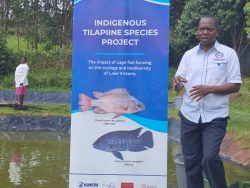
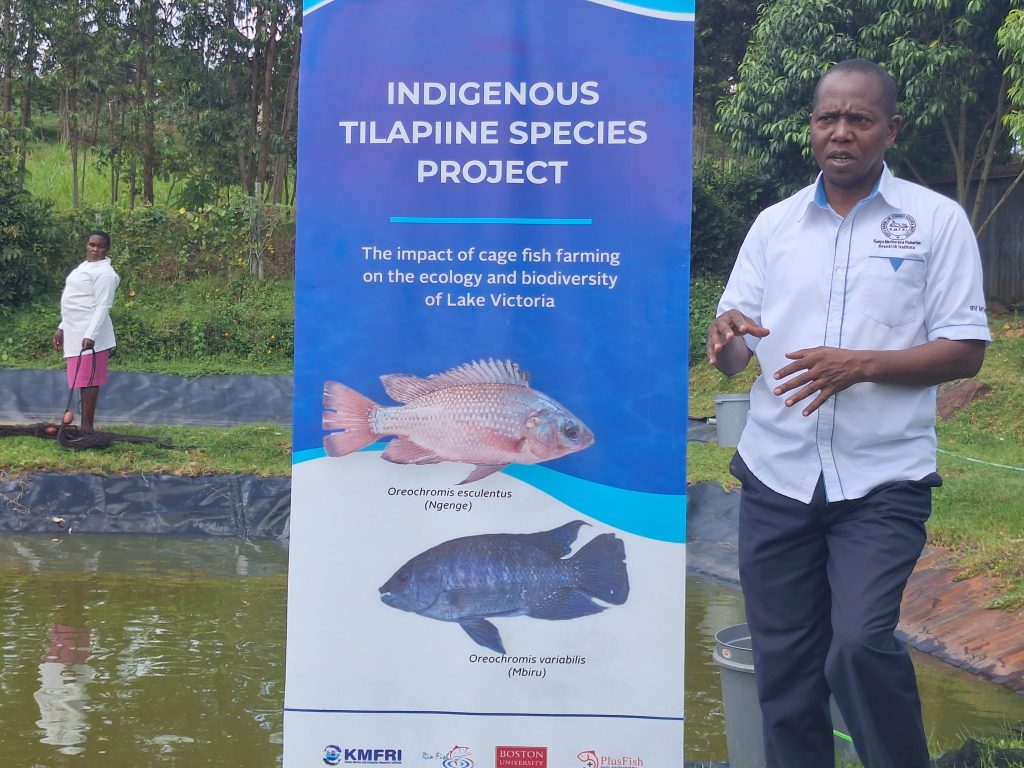
Kenya Marine and Fisheries Research Institute Assistant Director Aquaculture Dr Paul Orina explaining about fish species at Kegati Centre in Kisii Central Sub County, Kisii County.

KEMFRI moves to save endangered fish species

Kenya Marine and Fisheries Research Institute Assistant Director Aquaculture Dr Paul Orina explaining about fish species at Kegati Centre in Kisii Central Sub County, Kisii County.
Kenya Marine and Fisheries Research Institute Assistant Director Aquaculture Dr Paul Orina explaining about fish species at Kegati Centre in Kisii Central Sub County, Kisii County

By Bertila Nyanchama and Jane Naitore (KNA)

The Kenya Marine and Fisheries Research Institute (KEMFRI) has launched a study aimed at boosting the population of endangered indigenous fish species to enhance food security.

The two species, Ngege and Mbiru, were once the dominant catches in Lake Victoria in the 1950s but are now on the verge of extinction.

The fish, also known as Tilapia Singida and Victoria Tilapia respectively, were key in the diets of local communities before the introduction of Nile Perch and Nile Tilapia, the now dominant species.

KEMFRI’s Assistant Director of Aquaculture, Dr Paul Orina, said there is need to restore the native species to diversify food sources and reduce dependency on Nile Perch and Tilapia.

Dr Orina, who was speaking at Kegati Aquaculture Centre in Kisii County, said that the introduction of non-native species like the Nile Perch significantly contributed to the decline of indigenous fish populations.

“Our goal is to research and conserve the genetic material of Ngege and Mbiru to reintroduce them into the lake, creating a sustainable food sources that lessens reliance on just a few species,” he stated.

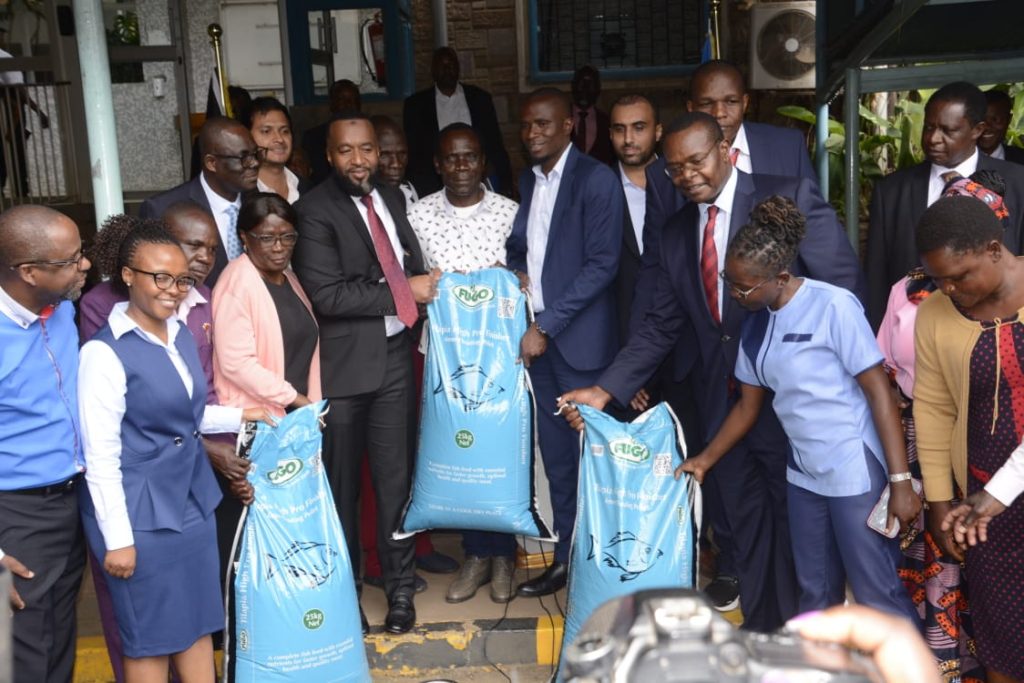
The research, supported by Boston University, Rio Fish and PlusFish Philanthropy, focuses on evaluating the performance and nutritional value of Ngege and Mbiru.

The objective is to determine if the species can outperform the Nile Tilapia in terms of nutrition and sustainability, potentially contributing to Kenya’s broader food security goals.

Dr Orina emphasised that the research further aims to assess the adaptability of the fish to aquaculture practices, particularly in fish cages and ponds.

Kenya’s efforts are part of the larger regional collaboration with Uganda and Tanzania, aligning with Sustainable Development Goal 17, which promotes partnerships in research across East Africa.

Together, the countries aim to integrate the species into the regional aquaculture industry.

According to Dr Orina, human activity, such as waste from growing cities around Lake Victoria, including Kisumu, Mwanza and Jinja, as well as the use of harmful fishing practices, have affected the fish populations.

To address these challenges, Dr Orina proposed implementing selective breeding programmes similar to those used for Nile Tilapia, to enhance the performance of Ngege and Mbiru in aquaculture environments.

The study is a significant step towards safeguarding Kenya’s aquatic biodiversity while also providing new opportunities for sustainable economic growth and food security.
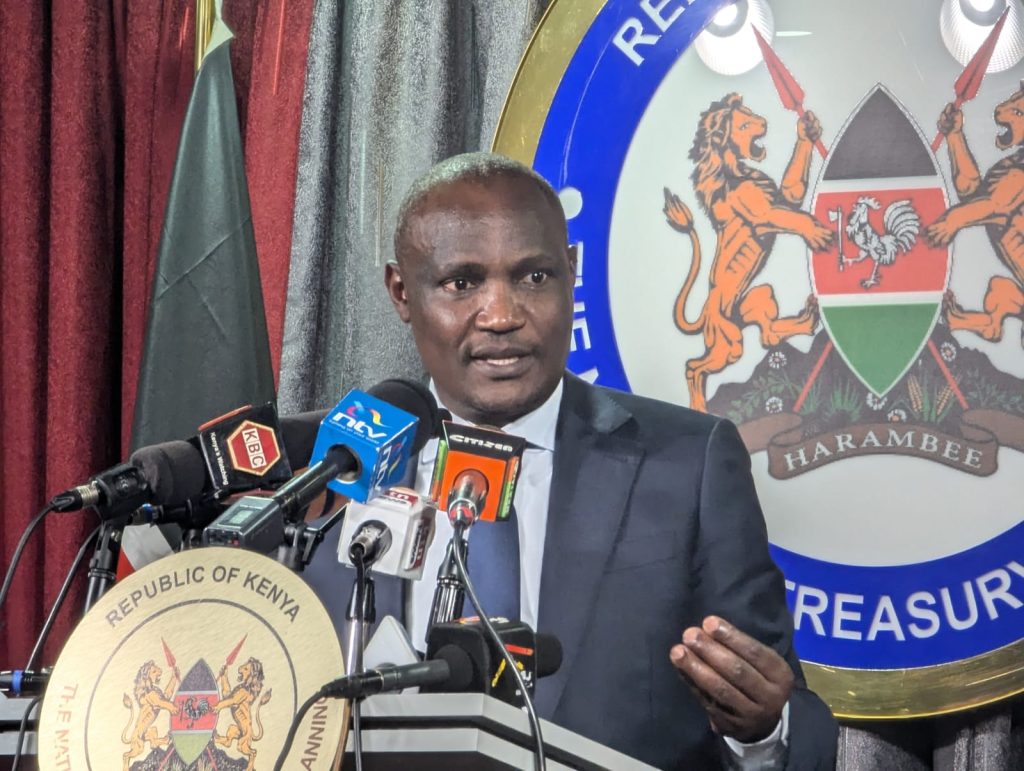
The Cabinet Secretary for National Treasury and Economic Planning John Mbadi addresses the media on the initiatives the National Treasury has put in place to promote accountability, revenue collection and economic growth.

National Treasury in push to expand tax base

The Cabinet Secretary for National Treasury and Economic Planning John Mbadi addresses the media on the initiatives the National Treasury has put in place to promote accountability, revenue collection and economic growth.

By Manu Mumba (KNA)

The National Treasury has introduced a series of initiatives aimed at expanding the tax base, improving transparency and fostering economic growth.

The initiatives include promoting accountability in public procurement, enhancing tax collection systems and supporting key sectors such as education to create employment and combat corruption.

The Cabinet Secretary for National Treasury and Economic Planning, John Mbadi, said at a press conference in Nairobi that the Ministry would implement a more comprehensive tax system that will expand the tax base.

“There are several taxable areas that have not been fully tapped. The Government, through the National Treasury, is committed to broadening this tax base,” Mbadi stated.

To enhance tax collection, Mbadi revealed that Kenya Revenue Authority (KRA) would enhance its digital system to improve efficiency.

“This digitisation aligns with the broader economic agenda of increasing revenue through a more efficient and expansive tax system,” he said.

Kenya’s tax revenue in the financial year 2023/2024 rose to Sh2.407 trillion from Sh2.166 trillion in the previous fiscal year, according to KRA. The Government is keen to collect more to reduce fiscal deficit and cut borrowing to finance its Budget.

Mbadi observed the National Treasury has taken steps to digitise public procurement processes to promote good governance and curb corruption.

“By automating budgeting and procurement systems, we aim to reduce the misuse of public funds and enhance transparency in Government spending,” Mbadi said.

To improve liquidity in the market, the CS said there would be prompt payment of pending bills, which is expected to stimulate job creation, especially for the youth.

“Paying off pending bills will boost market liquidity and create more opportunities for employment,” he noted.

Mbadi said there are ongoing discussions to reduce commercial banks interest rates for private sector borrowing.

To further strengthen accountability, Mbadi announced that the Government has rolled out an accrual accounting system, which will ensure that all liabilities are accurately reflected in the National Treasury’s balance sheets, improving financial transparency.

These reforms, aimed at boosting transparency and economic growth, represent a significant step toward creating a more accountable and efficient Government while positioning Kenya for sustained economic development.


- Mining, Blue economy and Maritime Affairs Cabinet Secretary Hassan Joho speaking during an engagement with stakeholders over cage-fishing project in Busia County.

Joho calls for public, private sector collaboration to exploit blue economy resources

- Mining, Blue economy and Maritime Affairs Cabinet Secretary Hassan Joho speaking during an engagement with stakeholders over cage-fishing project in Busia County.
– Mining, Blue economy and Maritime Affairs Cabinet Secretary Hassan Joho speaking during an engagement with stakeholders over cage-fishing project in Busia County.

By Nuru Soud (KNA)

The Government has called for increased collaboration between the public and private sectors in exploration of opportunities in the blue economy sector.

The Cabinet Secretary for Mining, Blue Economy and Maritime Affairs Hassan Joho said the industry holds immense potential in creating employment, wealth and food security for millions of Kenyans.

Joho, who was speaking at the Blue Economy Innovation and Investment Summit in Mombasa on Thursday, highlighted areas where there are plenty of opportunities, including aquaculture, fish processing, value addition, commercial fishing, fish ports and fish landing site infrastructure.

e added that the other opportunities are in maritime transport, manufacturing, energy and bioprospecting, all of which could bring about positive socio-economic changes.

Themed “Building an inclusive blue future,” the three-day summit brought together stakeholders, investors and innovators to explore and support blue economy initiatives.

Joho noted that technology has revolutionised the fishing industry, transforming it into a more sustainable venture that addresses environmental concerns like declining fish stocks and habitat degradation.

“By embracing modern technologies such as VMS, AIS, GPS, drones and data analytics, we can better monitor fishing vessels, track fish populations, and reduce bycatch, all while improving efficiency and profitability,” said Joho.

“These smart fishing technologies also provide real-time data on fish stock movements and water conditions, ensuring that our fishing practices align with sustainability goals,” he added.

The summit featured more than 24 start-ups seeking investment support for their businesses. Among the participants was Mega Gas Alternative Energy, co-founded by 28-year-old innovator Fredrick Nyoike. The Nairobi-based start-up refines plastic waste into affordable cooking gas, targeting low-income families.

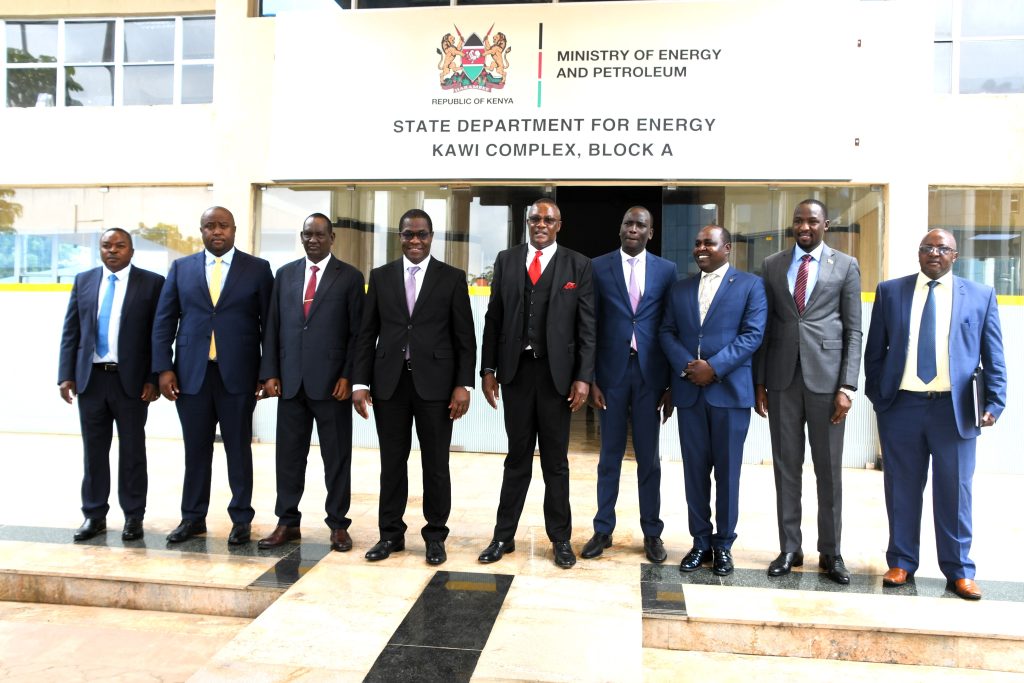
Energy and Petroleum Cabinet Secretary, Opiyo Wandayi (centre) and Deputy Chief of Staff Performance and Delivery Management, Mr. Eliud Owalo (2nd left) with Principal Secretaries and other senior state officers in the Ministry of Energy and Petroleum

Kenya’s power generation surges as State steps up investments in sector

Energy and Petroleum Cabinet Secretary, Opiyo Wandayi (centre) and Deputy Chief of Staff Performance and Delivery Management, Mr. Eliud Owalo (2nd left) with Principal Secretaries and other senior state officers in the Ministry of Energy and Petroleum

By Sharon Atieno (KNA)

Kenya’s power production has risen from 3,076 megawatts in 2022 to 3,243 megawatts in 2024.

The Ministry of Energy and Petroleum said the increase is in line with the Government’s Bottom-Up Economic Transformation Agenda (BETA), which seeks to ensure that every home is connected to electricity.

The rise in electricity generation is attributed to the Government’s increased investment in geothermal, solar and wind power production.

Kenya’s solar power generation stands at an average of 40 million kilowatts per hour (KWh) a month, a rise from 5 million KWh years ago, according to the Ministry.

Similarly, wind power generation has doubled to 150 million KWh a month while production from geothermal stands at a new high of 500 million KWh monthly.

Energy and Petroleum Cabinet Secretary Opiyo Wandayi celebrated the achievements, adding that the Ministry has equally made tremendous progress in other areas, including expanding power transmission lines by 22 per cent, from 7,846 kilometres to 9,577 kilometres, while power distribution lines have grown by 3.2 per cent, reaching 84,853.

The number of customers served by Kenya Power increased by 8.7 per cent, from 8.92 million in 2022 to 9.69 million in 2024, according to Mr Wandayi, who was speaking on Monday, October 7, 2024, when he hosted Mr Eliud Owalo, the Deputy Chief of Staff, Performance and Delivery Management, to assess the Ministry’s achievements and commitments for the 2024/2025 fiscal year.
In the Petroleum sector, Mr Wandayi said there is significant reduction in demurrage costs from $2.22 million in 2022 to $496,382 in 2024.

During the review, the Ministry committed to enhancing the policy and legal framework for energy development and expediting project completions.

This includes a review of the National Energy Policy 2018 and an emphasis on clean, affordable energy generation, highlighted by the construction of four institutional biogas plants and 207 domestic biogas facilities.

The Ministry also seeks to increase electricity access and improve supply reliability to support national prosperity. Ongoing efforts include validating electricity generation and transmission projects and developing a Power Generation and Transmission Master Plan (2025-2045).

Joy as reusable sanitary towels plant launched in Migori

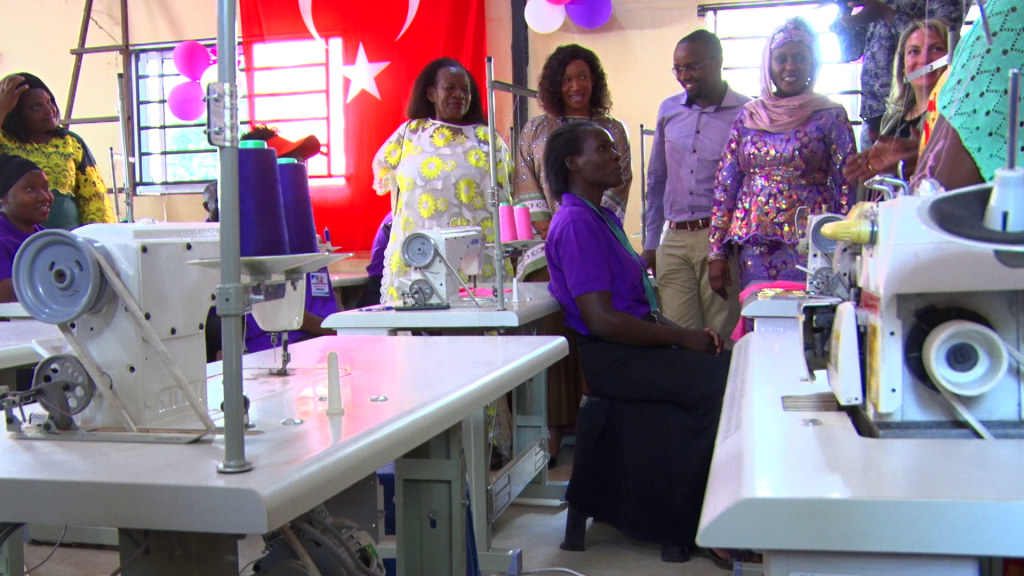
The inside of the Reusable Sanitary Towel Manufacturing Plant in Migori. The manufacturing plant has already employed directly 60 people drawn, mainly women, disabled and young people from Migori County to empower them economically. Photo by Geoffrey Makokha.

By Geoffrey Makokha (KNA)

A manufacturing plant dedicated to producing reusable sanitary towels has been launched in Migori Town.

Migori Woman Representative Fatuma Muhammed inaugurated the project done in collaboration with Turkish Cooperation and Coordination Agency (TIKA).

Muhammed said the plant would provide vulnerable school children with the essential sanitary products as well as school uniforms.

“Many vulnerable girls have been suffering in silence due to lack of sanitary towels. The new manufacturing plant will help restore dignity to many girls,” she said, adding that the efforts complements National Government’s distribution of sanitary towels to schoolgirls.

The reusable towels, she noted, can last up to six years with proper maintenance, allowing families to save on costs associated with the disposable alternatives.

The plant has already created jobs for 60 locals, primarily women, youth and people with disabilities, contributing to their economic empowerment.

Muhammed expressed gratitude to TIKA for support, noting it will enhance comfort and educational opportunities for vulnerable pupils in the area.

TIKA coordinator Yasmin Cansuz said the partnership focuses on ensuring access to basic needs for vulnerable girls. She noted that the manufacturing plant would enable the girls to pursue their education without worry of not having sanitary supplies and uniforms.

President Ruto Launches Climate WorX Initiative

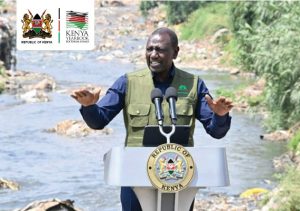
Today, President Ruto Launched Climate WorX Initiative in Korogocho, Nairobi County. He stated that climate change is an existential threat demanding immediate action. The initiative will create over 200,000 jobs Nationawide with more than 20,000 youth focused on generating the 45KM Nairobi River Basin. This project represents a major effort to tackle environmental challenges and promote sustainable development across Kenya.

KENYA’S STRATEGIC INFRASTRUCTURE REVIVAL: ALIGNING PAST VISIONS WITH FUTURE GROWTH

The Bottom-Up Economic Transformation Agenda (BETA) of the Fourth Medium-Term Plan (MTP IV) will see the Government intensify national connectivity through water, road, rail, port, energy and fibre-optic infrastructure as enablers of economic recovery and inclusive growth. The Kenya Kwanza Administration has finalized a framework for centralization of resources to deal with all stalled infrastructure projects. Government initiatives that were previously paused will soon be reignited and broadened.

The Government plans to modernize these projects to accommodate Kenya’s increasing population. This is a fresh start for the Government, with a commitment to complete all projects within the next two years. This approach aims to prevent resource wastage. No new projects will begin before the current ones are finalized. This aligns with the late President Mwai Kibaki’s iconic message, “Kazi Itaendelea,” and resonates with past visions for progress. The face of Kenya is changing at tremendous pace thanks to mega infrastructure projects.

From highways to ports to technology cities Kenya is now the country to watch. The Kenya Vision 2030 social and economic blueprint aspires for a country firmly interconnected through a network of roads, railways, ports, airports, water and sanitation facilities, and telecommunications.

What Bungoma Town needs to attain city status

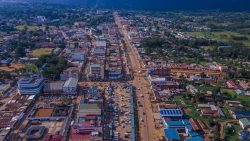
Aerial view of Bungoma Town.

Bungoma, a picturesque county on the slopes of Mt Elgon, is renowned for its rich culture and history. Its capital, Bungoma Town, began as a trading centre in the early 20th century.

The county’s proximity to Uganda has boosted trade, and its fertile soils support agriculture. The hospitable and industrious people from various communities have contributed to its success.

Over the years, Bungoma Town has grown into a vibrant hub of commerce, education, and culture. It is now seeking to become the country’s sixth city, a status that promises to elevate it further.

“It is my dream to ensure that Bungoma. Town becomes a city in my lifetime,” said Speaker Moses Wetang’ula.

During his recent visit to the county, President William Ruto revealed that plans are underway to elevate Bungoma Town to city status, bringing prestige, autonomy, and increased resources.

To be classified as a city in Kenya, a town must meet several key requirements under the Urban Areas and Cities Act, which gives effect to Article 184 of the Constitution.

The Act outlines the criteria for establishing urban areas, principles of governance, and resident participation.

Firstly, a town must have good infrastructure, including roads, street lighting, markets, fire stations, waste disposal, and disaster management capacity.

Secondly, it must have integrated development plans and the ability to generate sufficient revenue to sustain operations.

Thirdly, it must demonstrate prudent management and the capacity to deliver essential services effectively and efficiently.

Lastly, the town must have a population of at least 500,000 residents according to the latest census.

Bungoma Town meets some of these requirements but must do more. Recent projects unveiled by President William Ruto have set the town on the right path to city status.

President Ruto inaugurated two colleges in Bungoma County, enhancing their digital facilities in line with the Bottom-Up Transformation Agenda.

The county has 44 tertiary education institutions, including Kibabii University and branches of Masinde Muliro University of Science and Technology, positioning it as a key education hub.

Infrastructure development is also crucial. President Ruto launched various projects, including the tarmacking of the Mayanja- Bisunu-Sirisia and Mukhweya-Musese and Mukhweya-Kimukung roads in Kabuchai, Bungoma County.

“Urbanisation is critical in fulfilling the Sustainable Development Goals (SDGs) by uplifting living standards and providing human dignity while improving access to services and security, said Kenya Urban and Roads Authority Director General Silas Kinoti, noting the region has received 21km of tarmacked road.

President William Ruto during his recent tour of the region.

The county government has launched a street-lighting project boosting economic activities around the clock. “If you are not sure of the names, just name them according to the constituencies, for example, Tongaren Road,” Speaker Wetang’ula suggested while advocating for city status.

Significant investment has also been made in the Matulo Airstrip, upgraded with a new runway. President Ruto stated it would become an international facility.

Transport Cabinet Secretary Kipchumba Murkomen said the airstrip is expected to see increased traffic, serving residents in the Western region and neighbouring Uganda due to its proximity.

“We are working to acquire more land to expand it to 2.5 kilometres and increase traffic directly to the airstrip,” he said.

Once Bungoma is made a city, it will attract local and international investors, leading to economic growth and job creation. This means more people from rural areas or smaller towns seeking better employment and living conditions will flock there.

Kenya Yearbook backs university research and innovation at CUE conference

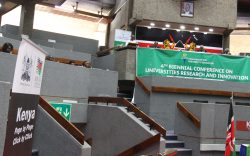
A session during the Commission for University Education (CUE) 4th Biennial Conference on University Research and Innovation at the KICC in Nairobi.

In support of university education, the Kenya Yearbook Editorial Board (KYEB) collaborated with the Commission for University Education (CUE) during their 4th Biennial Conference on University Research and Innovation at the KICC in Nairobi last week.

The conference, attended by 480 participants including national and international presenters, saw the launch of the “Varsity Digest,” an inaugural newsletter on university research and innovation designed and edited by KYEB. The publication showcases innovations and research initiatives from various universities across the country.

KYEB also produced the conference’s “Book of Abstracts.” KYEB’s Chief Executive Officer Ms Lilian Kimeto committed to supporting various government agencies in documenting their initiatives and programmes as part of KYEB’s mandate to tell Kenya’s story.

Prof. Chacha Chacha, CUE chairman, called on universities to integrate science, technology, engineering, and mathematics (STEM) with arts, humanities, and social sciences to foster a well-rounded society.

He noted that while most universities focus on STEM, arts, humanities, and social sciences are equally important for a holistic society.

Commission CEO Prof Mike Kuria encouraged universities to continue collaborating with the institution, emphasizing that the Commission and universities share a common vision. He urged universities to view the
commission as a partner, not just a regulator.

Kenya Yearbook remains committed to highlighting developments in the university sector, particularly in research and innovation

Sh3.9trn Budget to strengthen economic recovery

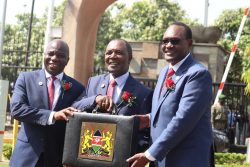
Treasury Cabinet Secretary Prof Njuguna Ndung’u (centre) with National Treasury Principal Secretary Chris Kiptoo (right) and his Economic Planning counterpart James Muhati before the reading of Budget speech last Thursday in National Assembly.

The government seeks to accelerate the Bottom-Up Economic Transformation Agenda (BETA) through the Sh3.9 trillion Budget unveiled last Thursday, allocating funds for various projects and initiatives aimed at benefiting mwananchi under the five BETA pillars.

The Budget focuses on enhancing agricultural transformation, supporting Micro, Small and Medium Enterprises (MSMEs),boosting affordable housing, achieving universal healthcare, and growing the digital superhighway and creative economy for job creation.

In agriculture, the government aims to transform the sector and promote inclusive growth through a value chain approach. “This aims at providing adequate and affordable working capital to all farmers through cooperative societies (aggregators),” said Prof Njuguna Ndung’u, the Cabinet Secretary for National Treasury and Economic Planning.

The National Treasury allocated Sh54.6 billion for agriculture, including Sh10 billion for fertiliser subsidies, Sh6.1 billion for the National Agricultural Value Chain Development Project, Sh2.5 billion for youth and women programmes, Sh747 million for small-scale irrigation, and Sh642.5 million for crop diversification. These allocations aim to stimulate job creation, especially for youth, through enhanced agricultural production supported by small-scale irrigation and subsidised fertiliser.

Agriculture contributes up to 30 per cent of the country’s Gross Domestic Product and employs 40 per cent of the population. Over 6.5 million farmers received 12.5 million bags of subsidised fertiliser this planting season, boosting food production.

MSMEs received a boost with Sh5 billion allocated to the Hustler Fund to scale up access to credit for business growth. Prof Ndung’u said the money would offer affordable credit to Kenyans at the bottom of the pyramid, with an additional Sh200 million for the Youth Fund and Sh1.9 billion for the Rural Kenya Financial Inclusion Facility, targeting youths in rural areas. Since its inception in 2022, the Hustler Fund has provided over Sh45 billion in loans to 20 million Kenyans.

The government’s commitment to addressing the housing challenge and creating quality jobs for youth in the construction sector and building products production is evident in the Budget. Sh92.1 billion was allocated for Housing, Urban Development, and Public Works, aiming to deliver 200,000 houses per year and enable low-cost housing mortgages. Affordable housing projects have created 120,000 jobs for youth, according to President William Ruto.

The health sector received Sh127 billion to promote access to quality and affordable healthcare through the Universal Health Coverage Programme. The funds will support initiatives to reduce HIV/AIDS, malaria, and tuberculosis cases, enhance vaccine and immunisation programmes, manage cancer, and build and equip hospitals. The Ministry of Health will begin mass registration for the Social Health Insurance Fund (SHIF) on 1 July 2024 to improve healthcare access.

The government also seeks to ramp up investment in the ICT sector, allocating Sh16.3 billion for the Last Mile County Connectivity Network, building the digital superhighway, and establishing the Kenya Advanced Institute of Science and Technology at Konza Technopolis.

In the past two years, the government has boosted job creation in the sector by providing free WiFi spots, training over 350,000 youths in digital skills to access digital opportunities, and setting up more than 85 digital hubs
across the country.